
You can also find my maps on DriveThruRPG & Roll20 or Login with Patreon
Why have the ledgers of the Meridian Market Company balanced to the cent for sixty years, and why is no coin ever counted? Why is the fish fresh on the ice each morning when the Kingsport fleet has been ashore since the September gales, and why does the produce never brown? Why does everyone in town remember the market, and no one remember buying anything? What are the radial medallions inlaid in the concourse floor wired to, and why are they warm? Why is the mosaic corridor to the lavatories older than the hall around it, and what moves beneath the eight swept plots that no trader holds? Why are the stools of the curved bar turned to face one another? What is the Meridian Market still stocked for, and what does it take in exchange?
Follow Cthulhu Architect on BlueSky!
It is not from the benevolence of the butcher, the brewer, or the baker, that we expect our dinner, but from their regard to their own interest.
— Adam Smith, The Wealth of Nations
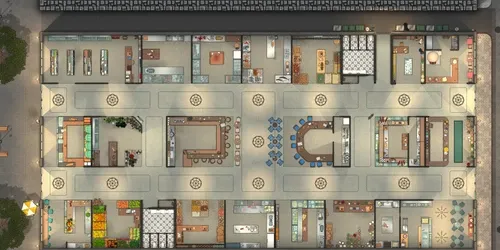
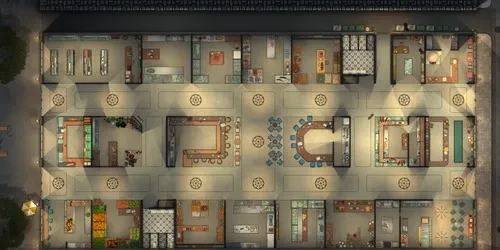
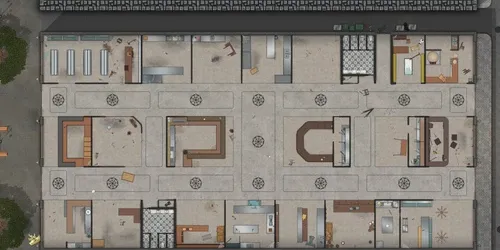
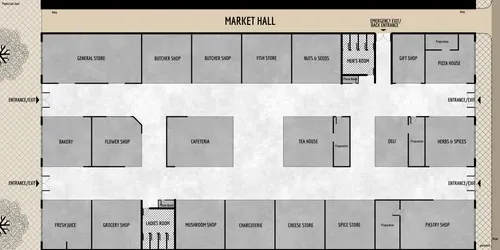
The discrepancy was not the sort a trust looks for. The Meridian Market Company had done business at the centre of Kingsport for sixty years and had never once failed to balance: every market day closed to the penny, every ledger squared, six decades of takings without a farthing missing or a farthing explained. Estates go wrong at the edges; this one was wrong by being perfect. The Boston lawyers, who had inherited the Company’s paper along with everything else the last director had touched, sent down an accountant named Nathaniel Rooke to find the error, on the sound principle that accounts this clean are never honest. He arrived on the early bus, in time to see the hall take the morning: a basilica of commerce three hundred feet long, two arcades of lock-up shops facing one another across a wide concourse, and a light like noon beneath a roof in which he could find no windows at all. Every stall was stocked to its front edge. Nothing was priced. The doors, he noted in his book, carry no hours, and do not appear to close.
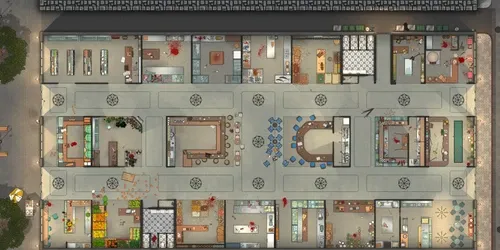
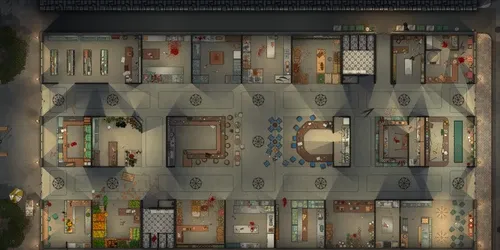
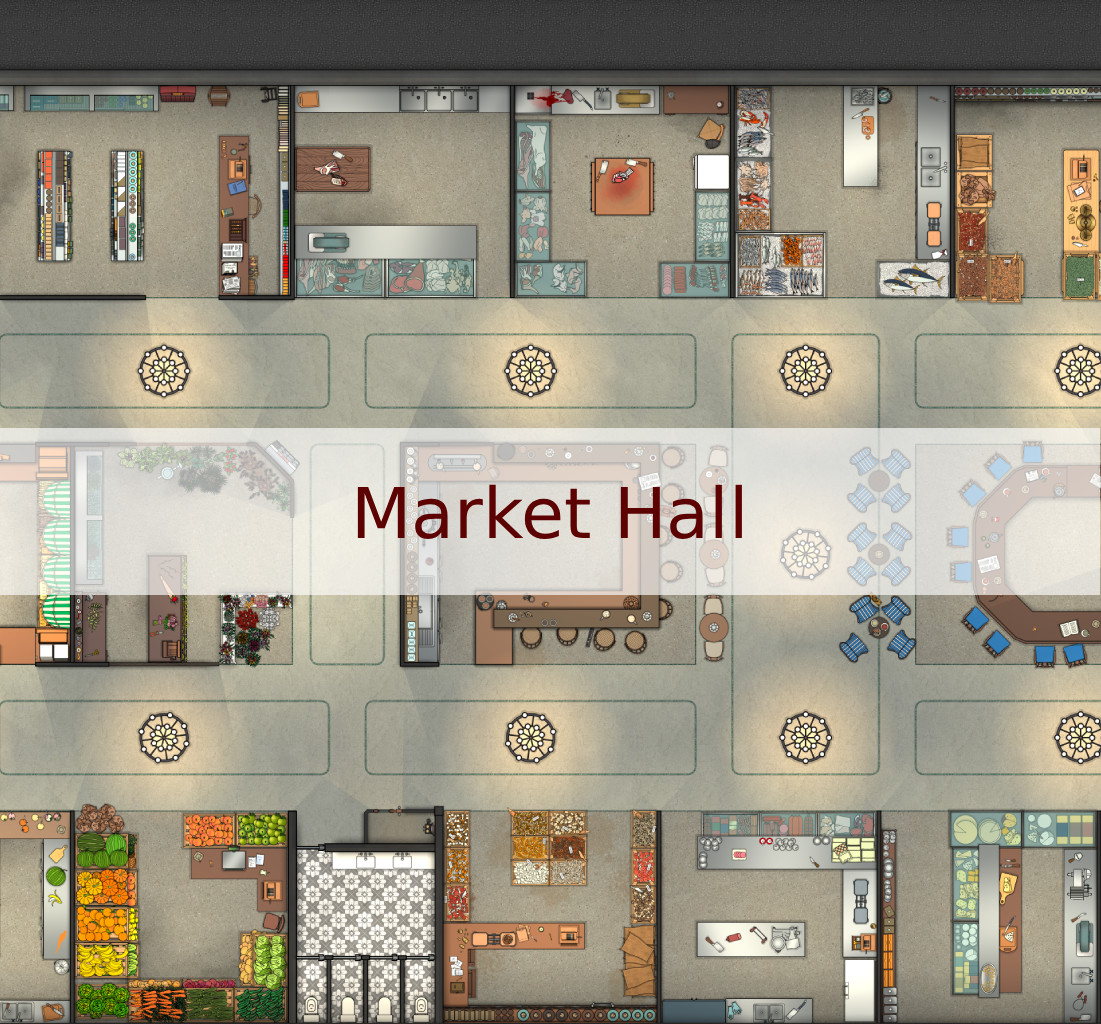
He began, as auditors do, with the traders. They were courteous people, keepers of the fishmonger’s and the delicatessen, the apothecary with its hundred amber jars, the greengrocer whose crates brimmed past any season—and they remembered everything about the market except transactions. They remembered seasons of it, crowds of it, decades of custom; not one could produce a receipt, name a customer, or say what anything had cost. The fishmonger’s case held fish laid out on ice that very morning, gill-bright, though the fleet had been ashore since the September gales and no cart had come up from the harbour. In the oyster bar a long table stood stained a red that matched no cut Rooke knew, scoured and stained again, fresh each dawn like a tide mark. In the bakery a young keeper was writing up the day’s column in a small upright hand that Rooke, with a feeling he declined to enter in the book, recognized as an accountant’s.
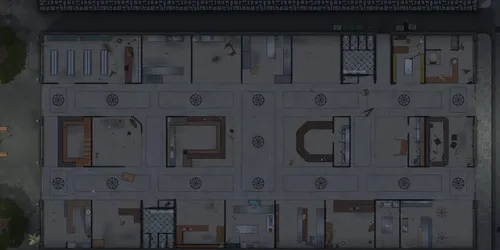
The building gave him more than the books did. At the county office the original drawings showed the concourse as one unbroken floor; the concourse he walked carried twelve medallions inlaid in a perfect grid—radial rosettes, petal within petal, faintly luminous, warm underfoot, and wired to nothing the drawings acknowledged. The only part of the hall older than the Company was the black-and-white mosaic of the corridor to the lavatories, relaid, the masons said, from something earlier, and hollow beneath, so that a dropped coin rang twice. From the joints of the medallions a draft rose at all hours, smelling of low tide, and the florist’s stock under its striped awning had turned every bloom toward the empty centre of the hall—against the light, or toward it, if the light was the floor’s. Along the concourse eight plots were marked out in brass, swept, unlet, and worn smooth at their edges in the pattern of people standing a long while, facing in. At the far end the stools of the curved bar stood in their horseshoe, turned toward one another, like an audience that had been seated and had only stepped out.
He stayed past what should have been closing to reconcile the takings against the bank, and the arithmetic declined to hold in the manner he had promised the lawyers it would. The takings column was not short. It was empty—sixty years of markets with nothing taken, no coin banked, no coin missed, the town attending all the while. He walked the aisles with his lamp to see where the money went, and understood instead where the people went. The hall was not arranged for trade. Nothing in it was: not the unpriced stock, not the doorless doors, not the plots worn smooth by shoppers who stood facing nothing at all. It was arranged for attendance, as a flower is arranged for the bee—every crate and jar and gleaming fish a colour on a thing that unfolds, and the light that lay so evenly everywhere coming from further down than the floor.
He knelt at the nearest medallion, meaning to measure it. The glow was not light returning from the surface; it came from further below than the floor, and the rosette, when he traced a petal, was warm as a cheek and polished in the way of things that are touched often. Under his flat palm it kept a time of its own: a slow radial pulse, patient as tide, patient as the draft that rose smelling of low water—and he understood at last what the market took, which is the one payment no ledger ever misses, because no one misses it. The town had shopped there all their lives at the rate of a little each visit—an hour, a name, the memory of a street, the face of a friend—which is why Kingsport remembered the market so fondly and could not recall a single purchase, and why the stock never ran down and never browned: nothing in it had ever been meant to be sold. He took his hand away slowly, the way one leaves a sleeping thing, and did not record the pulse or the warmth or how long he had stood there, because by then he could not remember all of it.
The lawyers received his certified accounts within the month, balanced to the cent, with a note to the effect that the Company’s business was not of a kind that audits. The ledgers at the delicatessen counter gained a new keeper’s hand shortly afterward—small, upright, very like Rooke’s own before it stopped pretending to be anyone’s—set beside columns of shoppers’ names and, against each, in the keeper’s red, whatever that shopper had paid that day and not missed. The centenary fair is posted for the spring. The posters promise free admission, as the hall has always implied it, and the medallions have been repolished for the occasion, each one waxed and shining like an eye that has been closed all winter; and beneath the word WELCOME painted on the banner over the doors runs the Company’s oldest promise, which the town has always known without knowing it—that nothing in the Meridian Market is for sale, and nothing in it has ever been free.


Your cart is empty
Browse Maps