
You can also find my maps on DriveThruRPG & Roll20 or Login with Patreon
Why do the freight manifests list the same shipment arriving nightly though no vessel has docked in a decade? Who works the loading crane when the warehouse foreman died at his post last winter? What seeps from the crates stamped for return to the deep, and why does the tide never reach the pilings beneath the east bay?
Follow Cthulhu Architect on BlueSky!
Trade isn’t about goods. Trade is about information. Goods sit in the warehouse until information moves them.
― C.J. Cherryh, Chanur’s Legacy
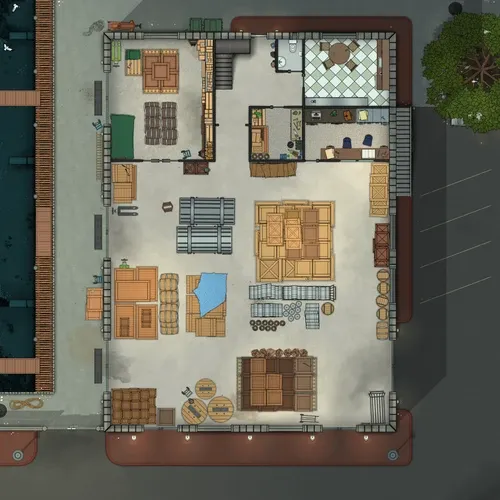
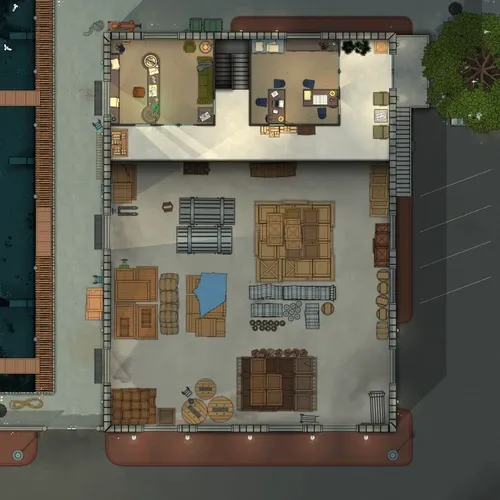
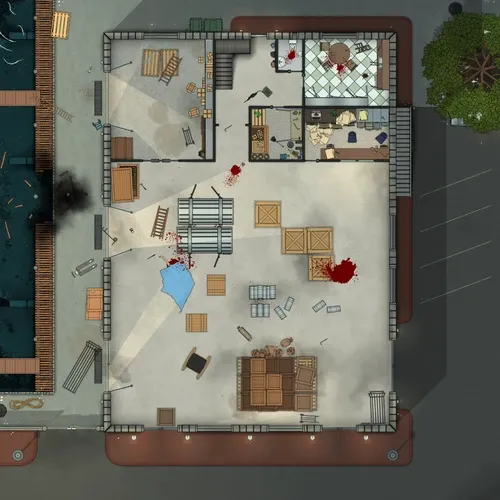
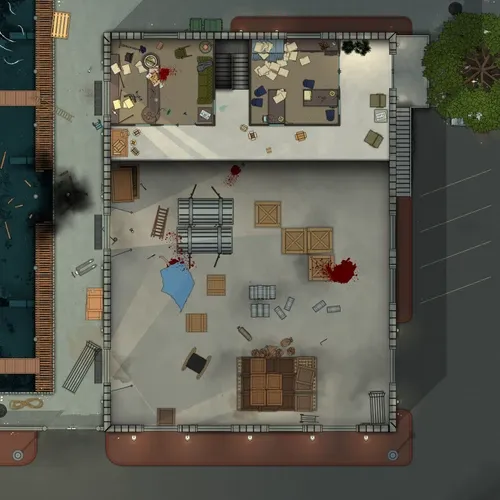
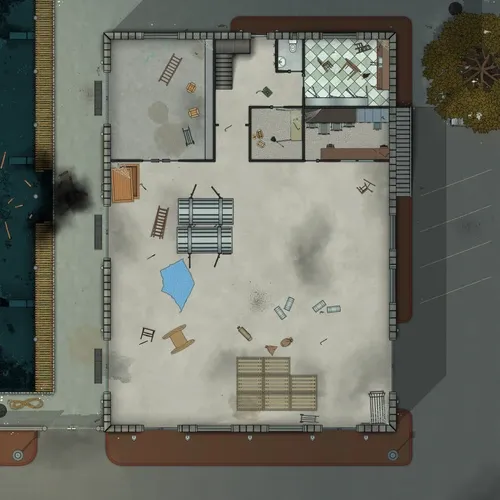
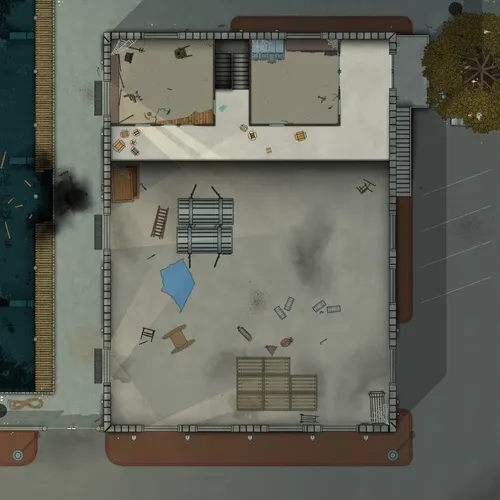
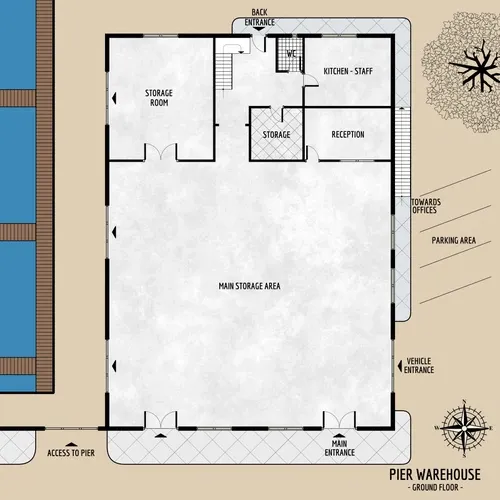
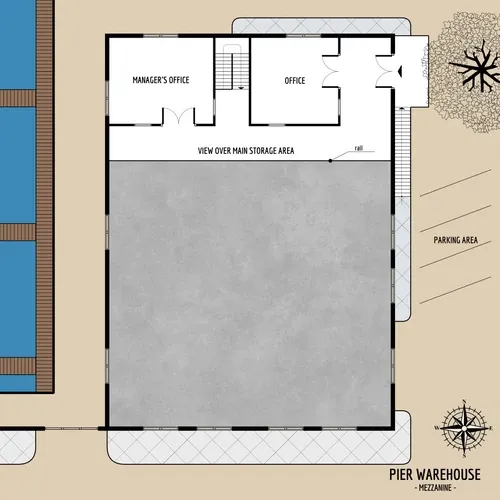
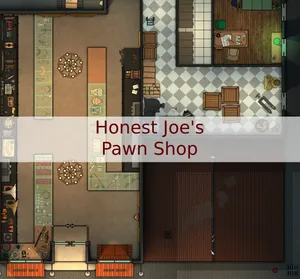
Harlan Voss had inspected harbors from Innsmouth to Kingsport and never questioned a manifest that matched its cargo. Warehouse 9 on the east pier was a routine call: walk the floor, verify the inventory, and sign the handover before the county auctioned off the estate of Marston & Cole. The ledger waiting for him in the boss’s office on the mezzanine listed a single recurring entry—a shipment arriving nightly from a vessel whose registry number no clerk could trace, consigned to a stretch of floor the warehouse’s own blueprints marked as solid wall.
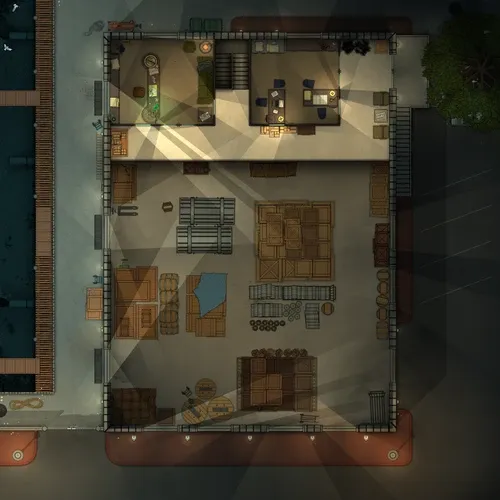
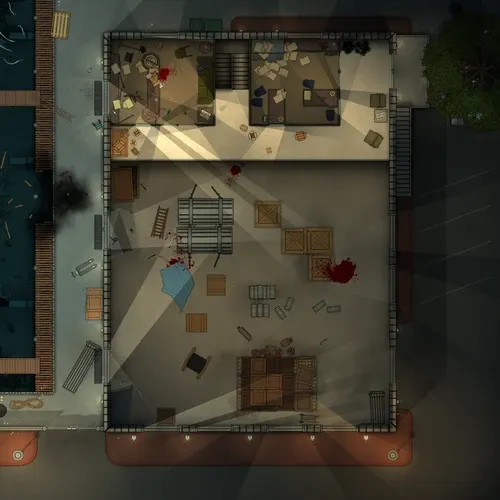
The mezzanine office still smelled of Darnell Cole’s pipe tobacco, though the senior partner had been found at his desk last February with the door bolted from the inside and no key in the lock. Harlan found the chair pushed back, the desk lamp burning though the mains had been cut at the breaker, and the window overlooking the warehouse floor fogged from the wrong side—as though someone had been breathing against the glass from the empty room below. When he pressed his palm to it, the fog retreated in the shape of a wide hand and did not return.
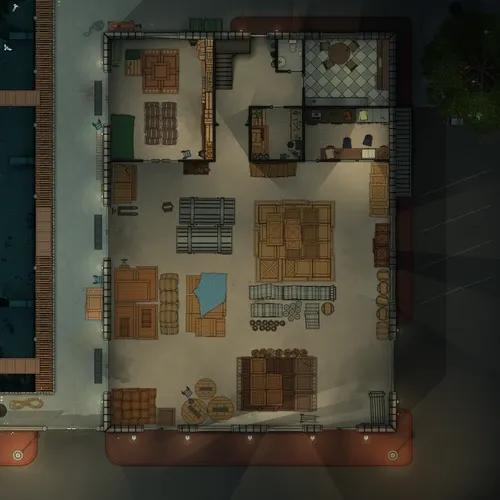
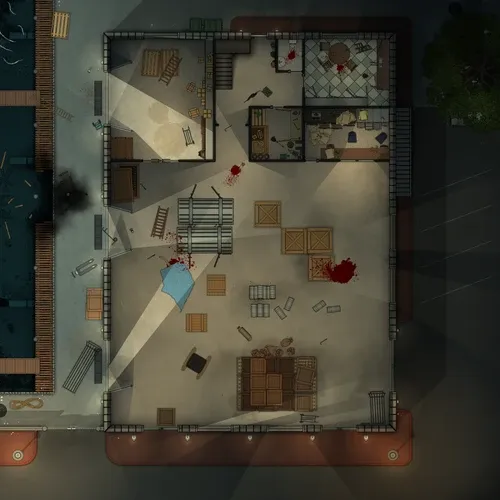
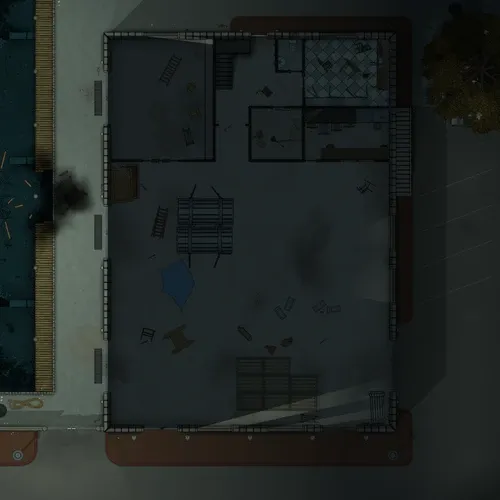
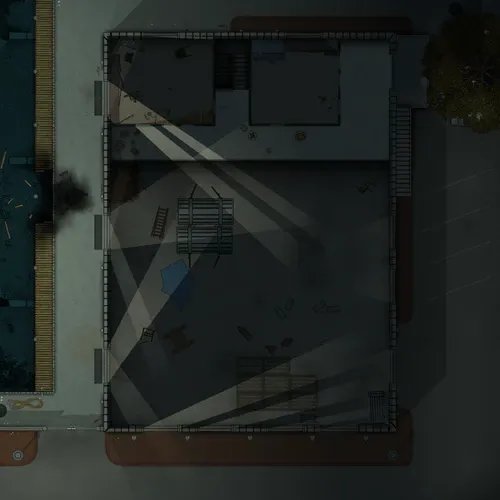
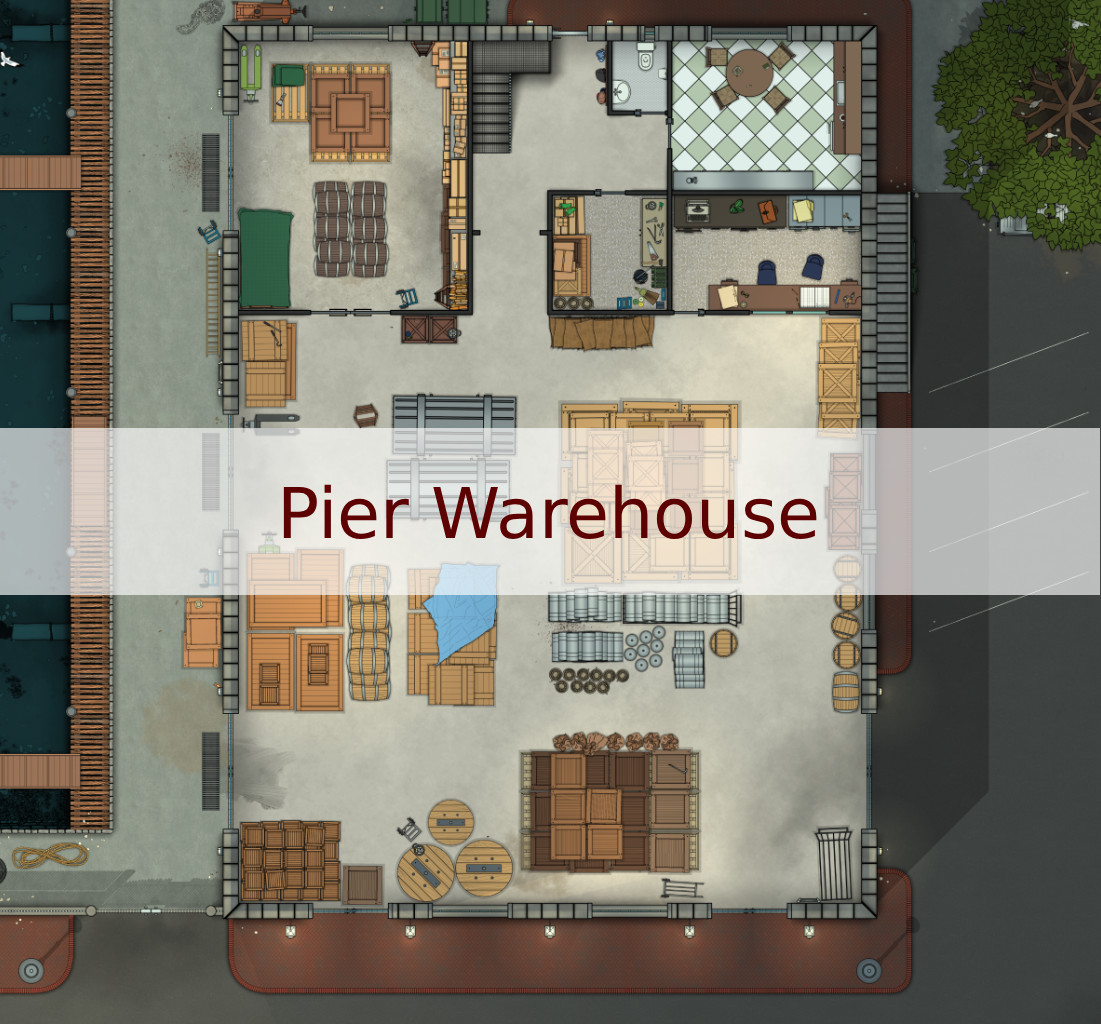
On the warehouse floor the crates stood stacked in their rows beneath sodium lamps that flickered without rhythm. Each crate bore a return mark no shipping line recognized: a circle bitten by three crescents, pointing inward. The wood wept brine though the roof had not leaked in years, and the packing straw inside had been woven—not cut—into the shape of long hair. He pried one lid and found only salt packed tight around something that flexed when his lantern struck it, something that had been breathing long enough to wear grooves in the wood from its ribs.
The foreman’s log, which he found wedged behind a filing cabinet on the mezzanine, was filled out in Darnell Cole’s hand up to the night he died—then continued in the same handwriting for every night since. Each entry recorded a shipment received, a tonnage signed for, a body count that started at zero and crept upward one digit at a time. The most recent page, dated the evening before Harlan arrived, listed his own name beside a crate number and the notation “contents responsive—awake on arrival.”
He descended the mezzanine stairs and saw that the crates had shifted while his back was turned, the nearest row now opened and arranged in a half-circle facing the door as if to greet the next arrival. Among them stood a figure in Cole’s coat, its collar turned up, one salt-cured hand resting on the clipboard Harlan had left on the foreman’s desk. It raised the clipboard toward him the way a clerk offers a document for signing, and the pen in its other hand was already uncapped and patient.
At dawn the harbor master found Harlan’s clipboard on the mezzanine desk, signed and notarized, the inventory now complete. Every crate on the floor bore his countersign in fresh ink. The log on the desk had a new entry in his own handwriting—one tonnage figure higher than the night before, with a body count that had gained its expected digit. The warehouse was quiet, the office lamp extinguished, and out beyond the loading door the tide was moving out without ever having come in.
Your cart is empty
Browse Maps