
You can also find my maps on DriveThruRPG & Roll20 or Login with Patreon
Why has no one in Arkham been ill in forty years, and why is the waiting room always full and never waiting? Why does the comic shop next door keep no prices, and why is its stock shelved by subscriber instead of by title? Why does every serial on the racks end on the word "continued," and none ever continue past the street? What is kept in the archives, where the patient files hold no diagnosis but a synopsis in instalments? Why is the examination room floored in black and white like a printed page? Why does the doorman keep mailboxes for subscribers whose addresses no longer exist? Why did the late doctor keep his own file on the shelf of the shop, and why is its last issue blank? What does the practice treat, when nobody in Arkham is sick, and what becomes of the reader when the story is cancelled?
Follow Cthulhu Architect on BlueSky!
The doctor should be opaque to his patients and, like a mirror, should show them nothing but what is perfect.
— Sigmund Freud
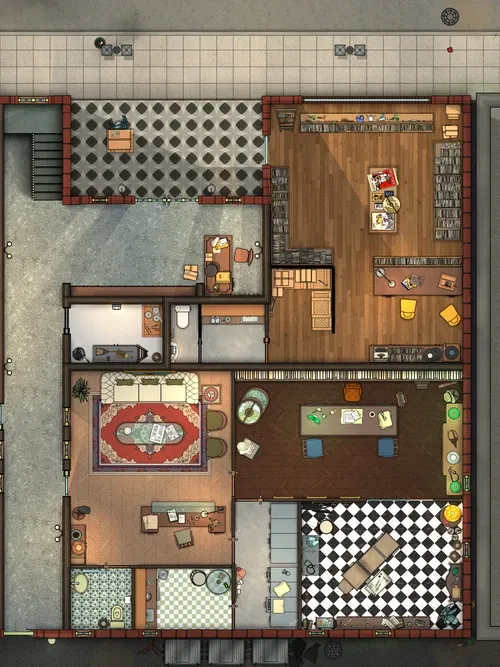
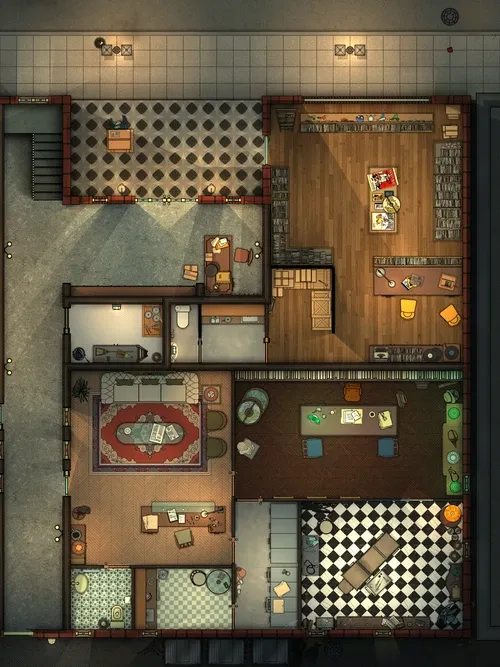
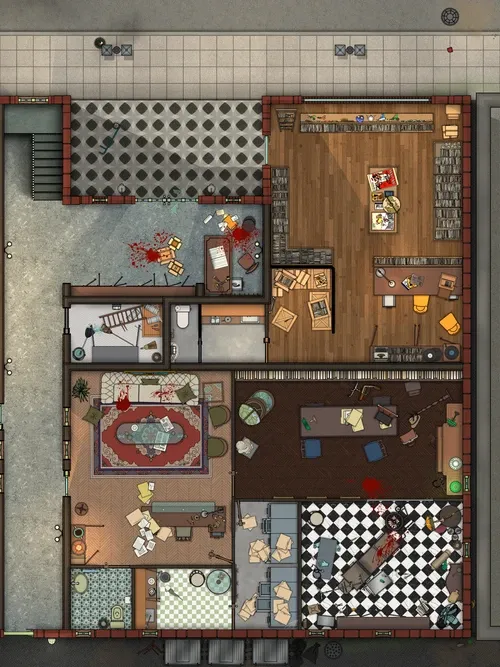
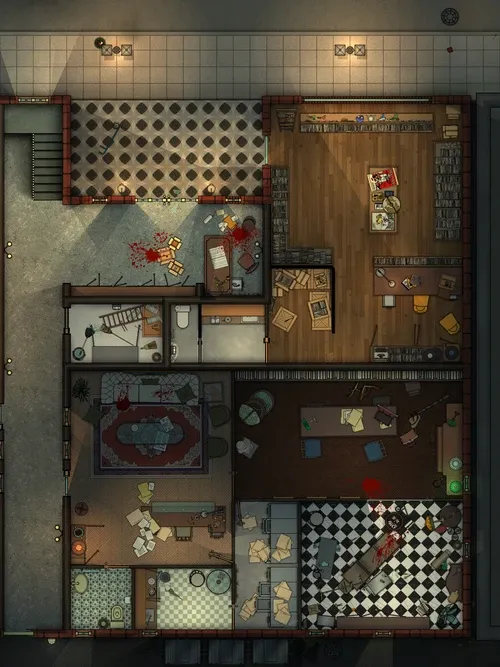
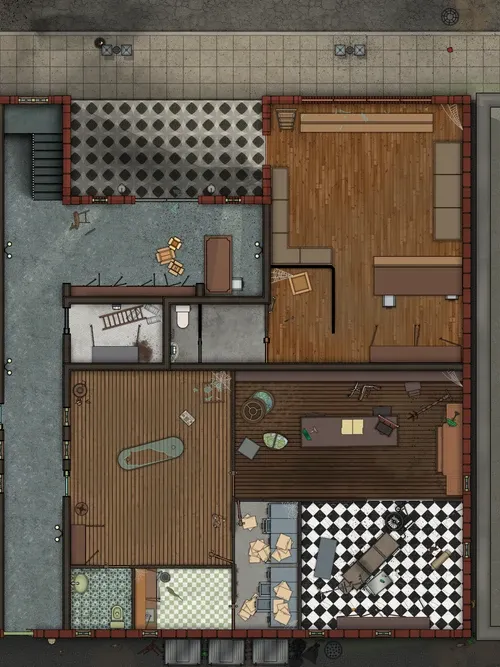
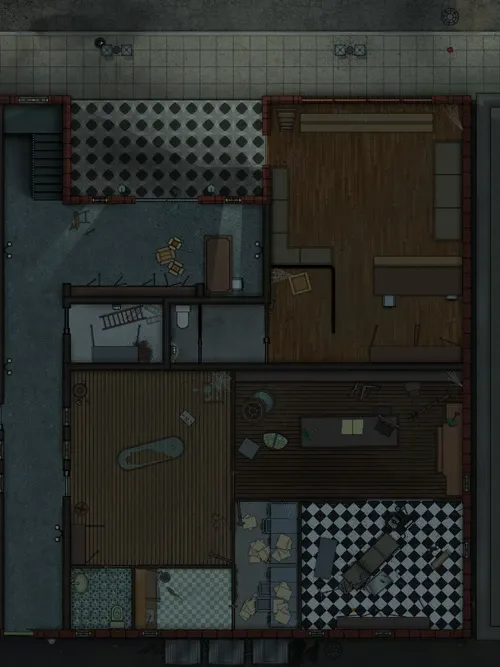
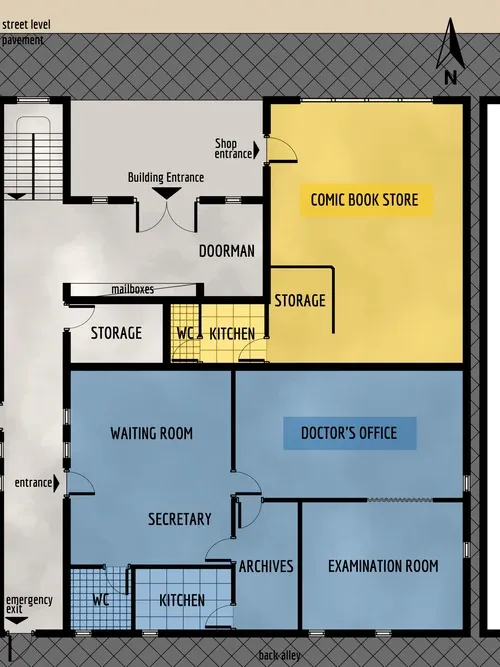
The practice of the late Dr. Ambrose Waite was offered in the classifieds as a going concern, which was the first strange thing, since the late Dr. Ambrose Waite had practised in Arkham for forty years without once being called to a deathbed. His successor, a young physician named Julian Marsh, came up from Boston to inspect what he was buying, and found the premises less a suite of rooms than an arrangement: one brick frontage on the street, two doors in it—the comic book shop on the right with its window of paper heroes, the practice door on the left with a brass plate polished by four decades of thumbs—and a single nook between, where a doorman kept the building’s mailboxes and the stair up to the upper floors. Marsh arrived at eleven and could not get a seat. The waiting room was full: the rose-red rug, the leather sofa, the coffee table stacked with ten-cent serials, every chair taken by people who did not look ill so much as absorbed. The secretary, a Miss Eunice Hart, consulted a ledger and told him, with the mild apology of a railway clerk, that he might wait some time; the doctor was with a patient. Marsh observed that he was the doctor. Miss Hart consulted the ledger again and said, in that case, the doctor might wait some time.
He began, as physicians do, with the other business, and introduced himself next door. The shop was called Pembroke’s, and Pembroke was a narrow courteous man who remembered everything about his customers except payment, because nothing in the shop was priced. The stock ran down both walls in long shelves, and was displayed on tables in towers of unread freshness, and filled the reading armchairs at the window; but it was shelved, Marsh noticed, not by title and not by subject, and not even by hero, but by subscriber. Every family in the ward had its run. The druggist’s serial was kept at arm’s height; the schoolmistress’s at eye level; the harbourmaster’s lay flat on the display table, nearest the lamp. Each instalment ended, as instalments did, on the word CONTINUED, and none of them, Marsh later confirmed, had ever continued past the street. The shop had the hush of a sickroom, though no one in it was sick. It had, he thought, the hush of a waiting room—and then he corrected himself, because that was the next door along.
The practice explained itself in the archives, and then declined to. Miss Hart gave him the forty years of patient files, and Marsh sat up a whole night with them in the room built to hold them, and found that not one file in the banks contained a diagnosis. Each held instead a synopsis: the serial of that household, summarised instalment by instalment in an upright hand—where the druggist’s daughter had got to in her own story, what the widow on High Street had survived so far, which chapter of the harbourmaster was owed to him since the gales. Appointments were monthly, like issues. The examination room, when Marsh unlocked it, had a floor of black and white chequer, laid like the panels of a printed page, and an examination table under the lamp; and in the doctor’s office, in the drawer of the desk, he found Waite’s notebook, which recorded no complaints of any patient, but headings such as storylines outstanding and panels owed and, against each, a date, and the date was always the first Tuesday of the month.
The registry gave him the rest. In forty years, no subscriber of Pembroke’s had died; the probate clerk said it as a joke, and then could not recall, on being pressed, the face of anyone who had. There had been cancellations—Pembroke’s word for them, offered without being asked: the family that moved to Boston in ‘29 and let the serial lapse; the man lost with the Kestrel in the September gales, whose instalments went on being delivered to a mailbox in the doorman’s nook until the mailbox itself was stopped. Marsh walked back past the nook and read the names on the brass, and found addresses on streets that had been demolished, and recognised, with the cold specific dread of a professional man finding his own name in the wrong ledger, that he could not have described the face of a single subscriber whose file was closed. Of the late Dr. Waite he had asked too soon and too much; he found the answer himself, on the newest shelf of Pembroke’s, in a run shelved flat and kept apart: the doctor’s own serial, forty years bound and continuing, and the last instalment blank but for the word CONTINUED, and beneath it, in the upright hand, an appointment for the first Tuesday of the month in which he died of nothing at all.
He stayed past closing that night, meaning to leave, and read one serial from its first issue to its latest, and understood what the building was for. The panels were the rooms he stood in. The waiting room was there, and the rose-red rug; the secretary’s desk was there, and the archives; and every serial, whenever its story required a scene of peril, drew the same room, the same lamp, the same table under the light, and the chequer of the examination floor for its borders. The doctor had never treated a patient in forty years. He had treated readers: he had kept the stories open, an instalment at a time, because a story that is continued cannot be finished, and a character in an unfinished story cannot be written out. The final panel of every serial was drawn already and held back—always the same room, always the table—and the town went on being well, issue after issue, on the understanding that the appointment would be kept and the panel would be postponed. Waite had died, Pembroke said gently, of a cancelled subscription. There was no other cause of death in Arkham.
The practice of the late Dr. Ambrose Waite is a going concern. Dr. Marsh took it over within the month, and found on the newest shelf, shelved flat and kept apart, a serial with no subscriber’s name on it yet called The New Doctor, No. 1, datelined the day of his arrival, and drawn, in its opening panel, a young man standing in a shop he could not remember entering, holding an instalment he could not remember being handed. He took out a subscription, as one does. The waiting room is full and the shelves are stocked and the examination room is swept, and the appointment cards on the secretary’s desk say what they have always said, which the town has always known without reading it: that the first Tuesday of the month is enough, that no one in Arkham dies of anything but cancellation, and that everything, always, will be continued.



Your cart is empty
Browse Maps