You can also find my maps on DriveThruRPG & Roll20 or Login with Patreon
Why does the barkeep rake the sand smooth every dawn and study the drag marks that run from the loungers down to the tide line? Why does the boat by the shore never drift though no one has ever tied it off, and why does it put out only on nights when the moon keeps below the horizon? What do the patrons hear in the last song of the evening that sends them walking smiling past the last umbrella and into the surf? And why does the house liqueur pour green and taste of twenty fathoms, when the shelf of good rum behind the bar has never once been opened?
Follow Cthulhu Architect on BlueSky!
The ocean here is weird. It’s the wrong kind of blue.
— Nicola Yoon, The Sun Is Also a Star
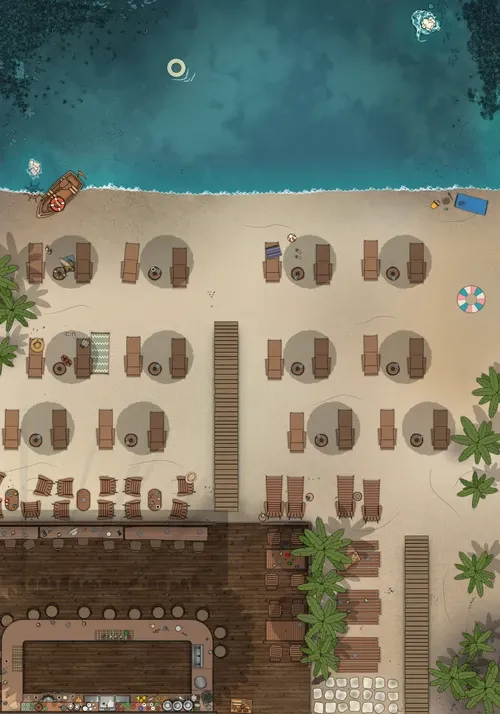
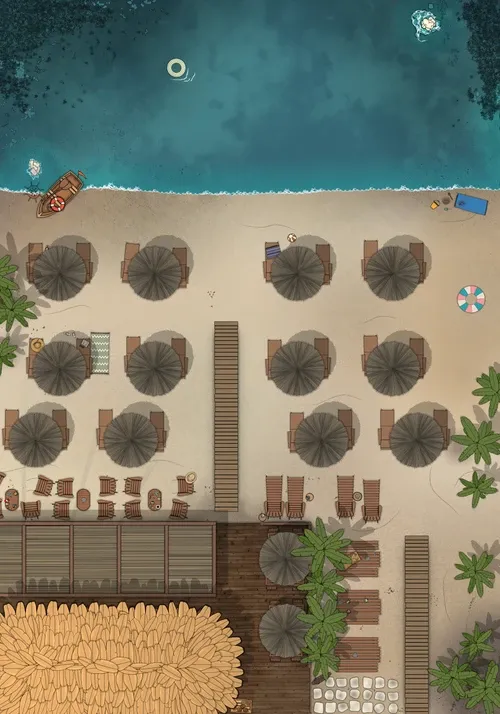
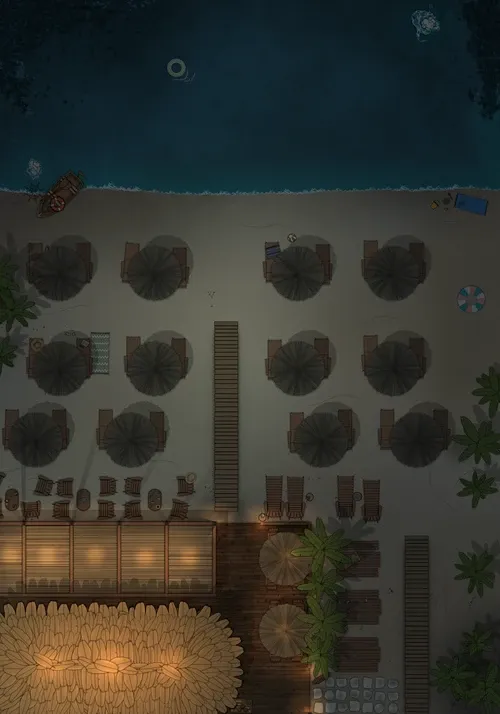
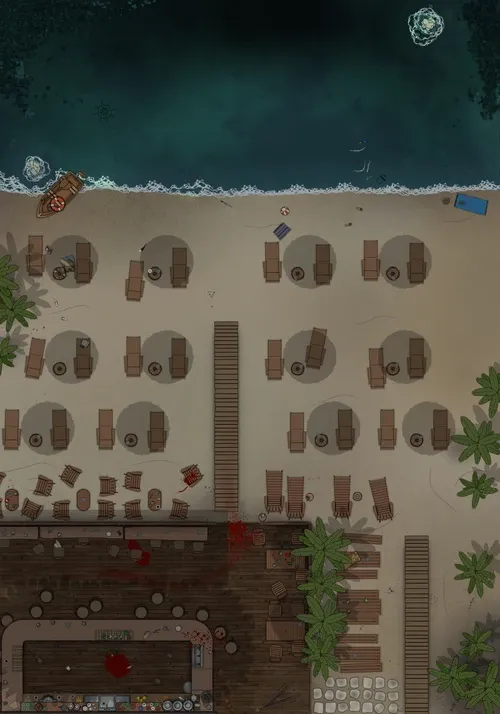
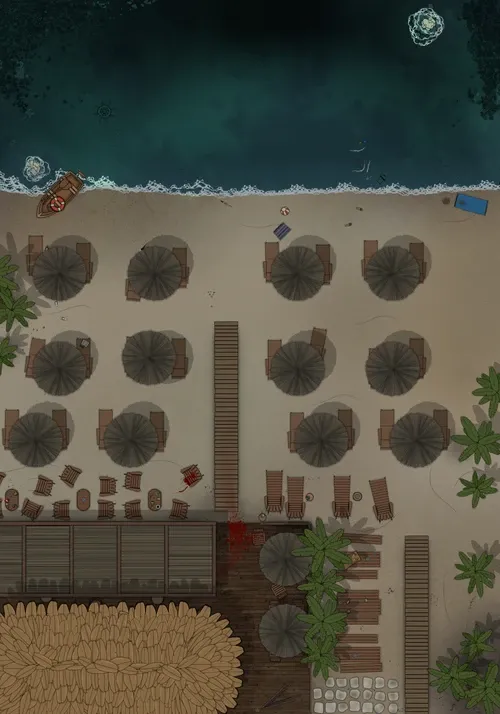
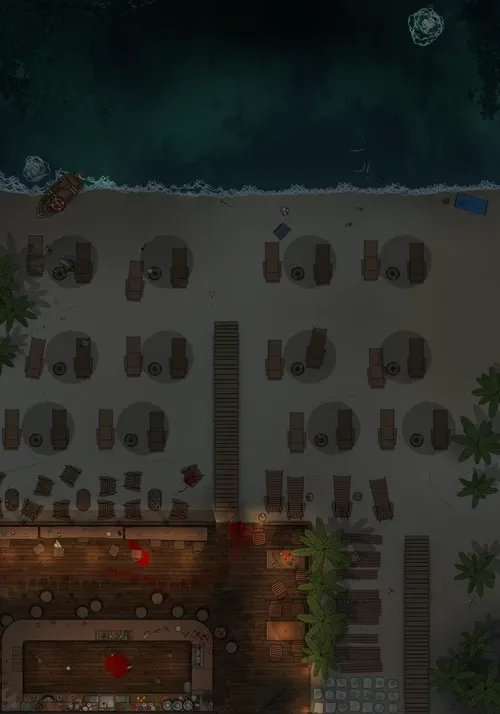
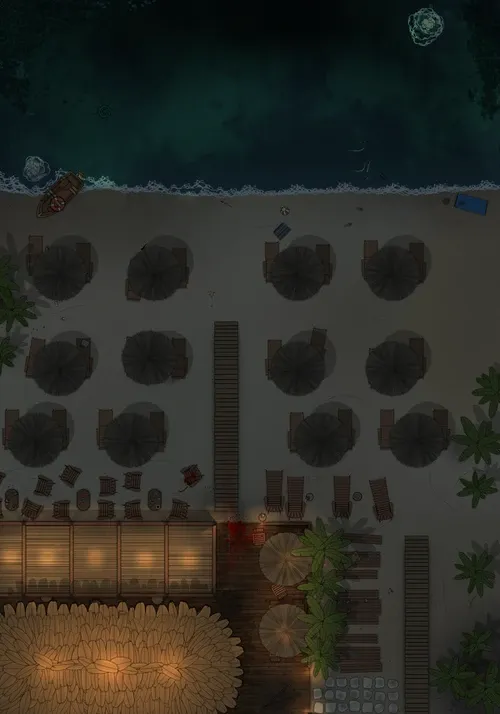
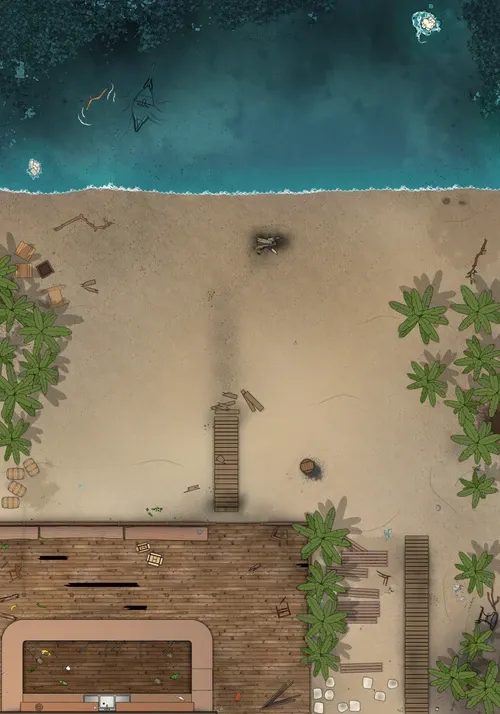
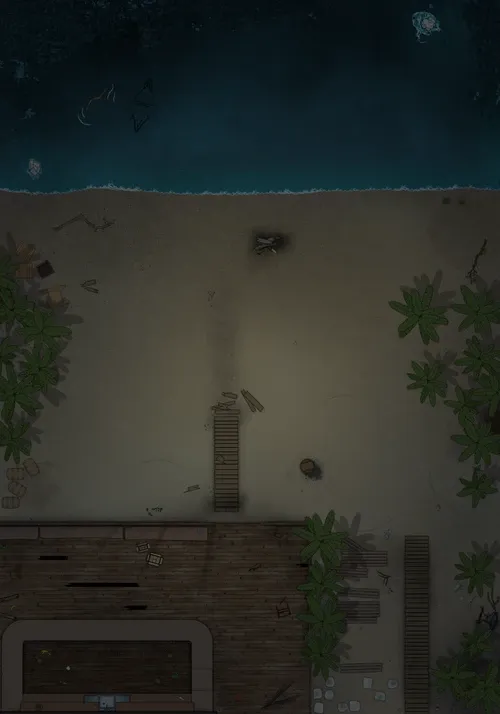
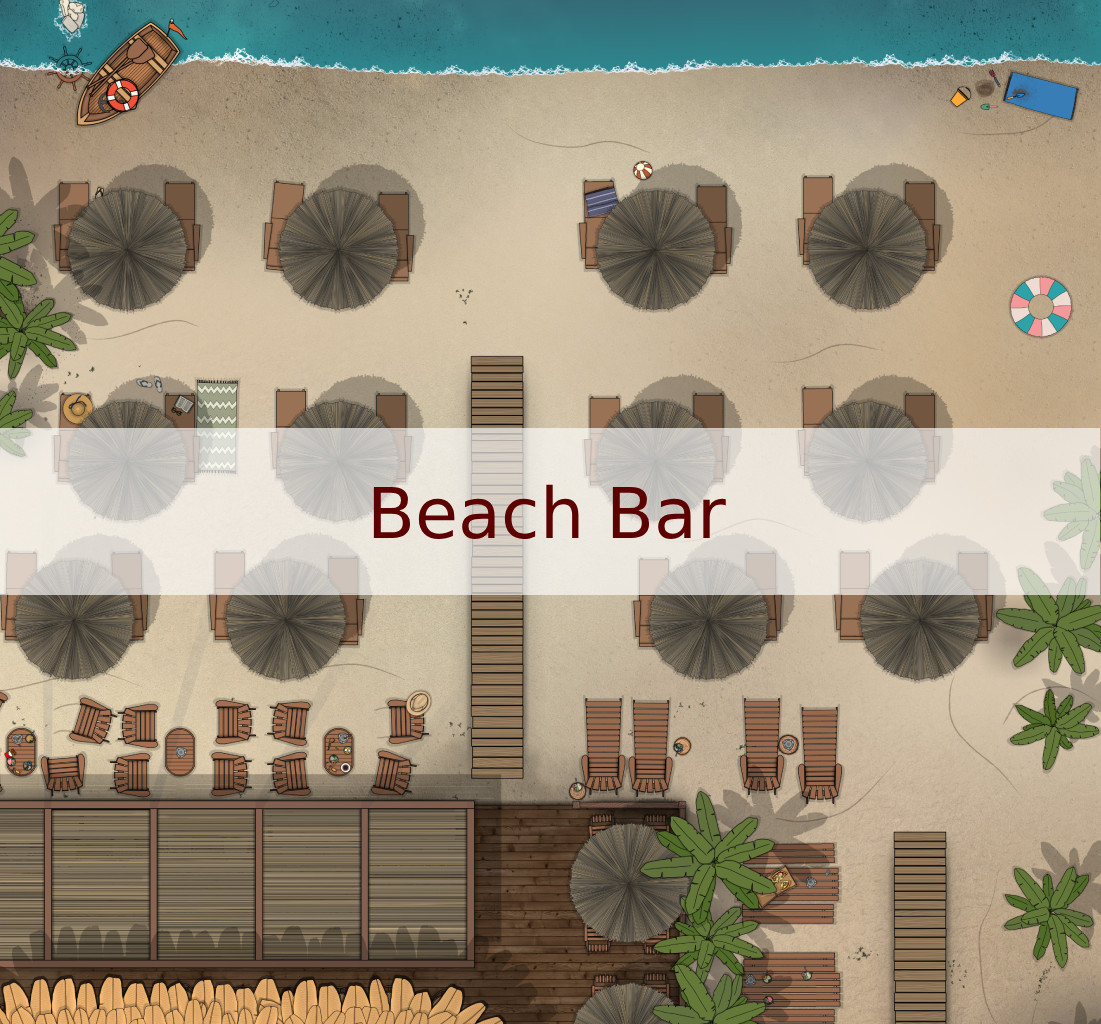
Clara Winslow came to Graystrand in the last week of August to find her brother, who had taken a summer’s work tending bar at the stand at the back of Graystrand beach and had stopped writing in July. The guidebook called it the finest beach on this stretch of coast, and at first glance it looked the part: the thatched umbrellas stood ranked in perfect rows, the loungers were squared to the inch, the boardwalk ran dead straight from the bar down to the tide line, and a boat rode the shallows exactly where a boat was meant to ride.
The patrons lay under the umbrellas from opening to dusk, pale as grubs and pleasant as church deacons, each with a tall glass of the house liqueur going green as it warmed. They praised the bar to her, all of them, in the same words and the same order, and their skin had a shine to it like wet slate in the rain. The barkeep, a wide soft-spoken man named Dana whose sunburn had not peeled once all summer, told her her brother had liked the work so well he had stayed on past the season. Clara did not have the heart to tell him the season had three weeks left in it. She had her brother’s last letter with her, and the barkeep’s own hand had addressed it.
She learned the bar’s routines quickly, because they were few and kept with a liturgy’s care. No ice ever touched the drinks, yet every glass came off the counter cold as the bottom of a well. The cask that fed them stood in the shade beneath the thatch at the bar’s end, never dry and never full, sweating a cold fog onto the deck boards that smelled of a deep-sea trawl—of brine and old weed and something beneath both that stirred the fog when the noontime air above it was dead still. There was a ledger kept on the bar with the guests’ names and the tide tables side by side, and beside each date a column of little rows ruled out, the way a barkeep strikes a tab that has been settled in full.
Every dawn Dana raked the sand flat from the back of the beach to the waterline, and every day by noon the drag marks came back: shallow twin furrows running from under the last row of umbrellas, across the raked ground, down the boards of the boardwalk, and into the surf. Never back. The boat, which she never once saw tied to anything, rode exactly where it had ridden the day before. And on the third morning, before the rake had done its work, she knelt and read the sand where the furrows ended, and found a boot print she had known since she was six years old—size thirteen, with the split in the sole of it where Tom’s foot had never formed right.
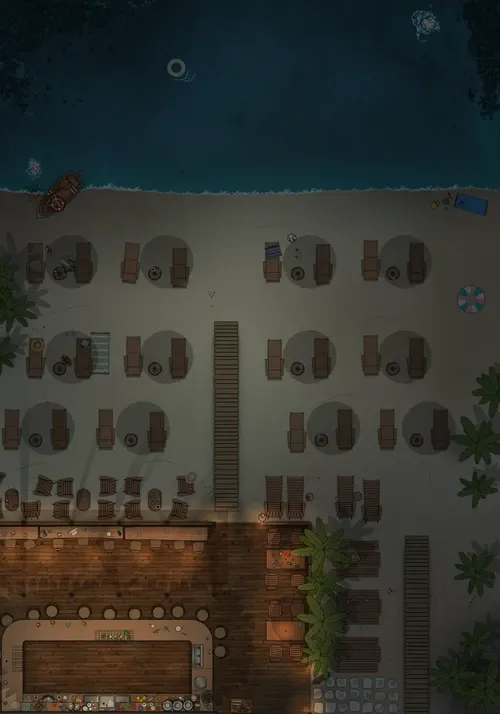
She meant to leave that night. She had one foot on the path to the road when the last song of the evening started up from the bar—a steel-drum tune slowed to half its tempo that the patrons hummed along to in unison—and she found she had turned back toward the boards without any memory of choosing to. The new moon had kept the sky dark, and when she looked past the bar she saw the tide had gone out beyond the sandbar farther than any tide table she had copied for the trip. The whole beach stood exposed and gleaming, and on the wet flats below the waterline, ranked in rows as straight as the umbrellas above, stood tables—set for service, white clothed, each with its tall glasses waiting.
The patrons rose from their loungers together and went down the boardwalk two by two, unhurried, singing back at the water the way a congregation answers a psalm, and out of the drowned channel beyond the sandbar something came up to be seated. Clara saw her brother among the waiters with a tray on his shoulder, walking down the boards where the drag marks ran, and at his throat were slits that had not been there in July, opening and closing like a fish landed and unlanded. He saw her seeing him, and smiled with the whole of his face, and set a green glass on the rail beside her without breaking stride. “The season never ends here, Clara,” he said. “And the help-wanted sign is always out.”
The constable found her sandals at the landward end of the boardwalk a week later and wrote it down as a drowning, because that was the tidy word for it. The barkeep raked the sand flat the next morning, and every morning after. Under umbrella nine a new guest sleeps pale as a grub through the long afternoons, drinking the house liqueur as it goes green in the glass, and Dana keeps the cask cold and the ledger ruled and the boat riding its own reflection—ready for whatever comes up the drowned channel on the dark of the moon, hungry, and expecting the full service of the house.


Your cart is empty
Browse Maps